My Opi5 Cluster
A small bare-metal cloud, built at home.
How it started
The cluster didn’t begin as a carefully planned infrastructure project. It
started with 2 × Orange Pi 5s and 1 × Raspberry Pi 3 that I happened to have lying around.
At the time, the Orange Pis were the most powerful machines I had, so they
naturally became the foundation of the cluster, and with that, the opi5-cluster was born.
From there, things gradually grew. More Orange Pis joined first, keeping the cluster firmly in ARM territory. Eventually, x86 machines found their way in too, as I started repurposing old laptops and mini-PCs that would otherwise have been gathering dust.
The hardware has changed quite a bit since those early days, but the opi5-cluster name stuck. These days, it's less a description of what's running in the cluster
and more a reminder of where the whole thing started.
What is it?
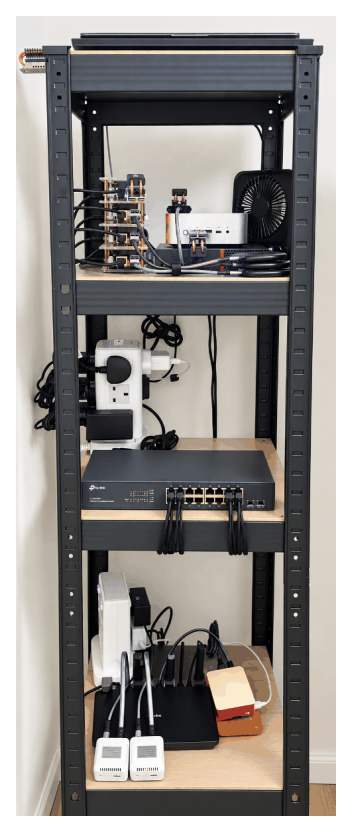
A self-hosted K3s cluster running on a mix of ARM and x86 hardware, providing the foundation for infrastructure experiments, personal services, data platforms, AI workloads, and everything else I decide to build.
Design principles
Six ideas shape every decision in the cluster:
- Self-hosted first. If it can run at home, it runs at home. Cloud services are treated as an edge, not a foundation.
- Everything as code. Every application live in Git and are reconciled via ArgoCD. Nothing is hand-built and hoped for.
- Secrets out of Git. Vault is the single source of truth for credentials, synced into the cluster by External Secrets Operator.
- Heterogeneous by choice. ARM and x86 nodes coexist. Multi-arch images are a requirement, not an afterthought.
- Real services, real stakes. The cluster runs things I actually depend on: DNS, Media, Data, Bots. Uptime matters because the users are real.
- Serious, not bureaucratic. Operated with production discipline (GitOps, Observability, Backups) without meetings, tickets, or change-approval theatre.
The cluster follows production patterns (GitOps, Secrets Management, Monitoring, Backups), but it is operated by one person for one household. No tickets, No approval flows, No on-call rotation. Just infrastructure taken seriously.